At 2,000 m the air pressure and therefore the oxygen content per lungful of air is about 12% lower than at sea level. It keeps dropping as you climb, around 30% lower at 3,000 m, 40% at 4,000 m and by 5,000 m each breath delivers 45% less oxygen than the same breath at sea level.
On top of that, the blood's ability to store and transport that oxygen also reduces, by 6-10% per 1,000 m elevation gain even in trained athletes. So, by 4,000 m there is both 40% less oxygen in your lungs, and you've experienced a 25-40% reduction in your ability to utilise it.
Over time your red blood cells get better at working in a lower oxygen environment which should blunt that 25-40% deficit a bit. But even with proper acclimatisation there is a lot less of the good stuff to go around.
When your muscles start working hard they place a high demand on the available blood oxygen - especially those big leg muscles you spent all that time building on the stairmaster before the trip. This means that your brain is at risk of hypoxia.
What's more, the instinctive hyperventilation as you're huffing and gasping your way up the mountain just makes things worse. Your blood is already as saturated with oxygen as your fitness and environmental factors allow. So, as free divers know, the heavy breathing just creates a CO2 deficiency - to which your brain reacts by constricting blood vessels reducing oxygen availability even more!
For me, the effects of altitude really kick in at around 4,500m. Up to that point I'm able to maintain a fair proportion of the gym-bred intensity that was accumulated before the trip. From there to 4,800 m I feel the effort much more intensely, but can usually persevere quite steadily.
However, at 4,800 m my personal oxygen budget starts to fall short. The brain has a bunch of ways to warn you to slow down (and just might shut down the whole system if you don't listen!). The obvious first indications are light-headedness and dizziness - like you've stood up too quickly. The solution is to just top moving, a couple of breaths between steps seems to put things back to normal, and then keep moving upwards a little more slowly than before.
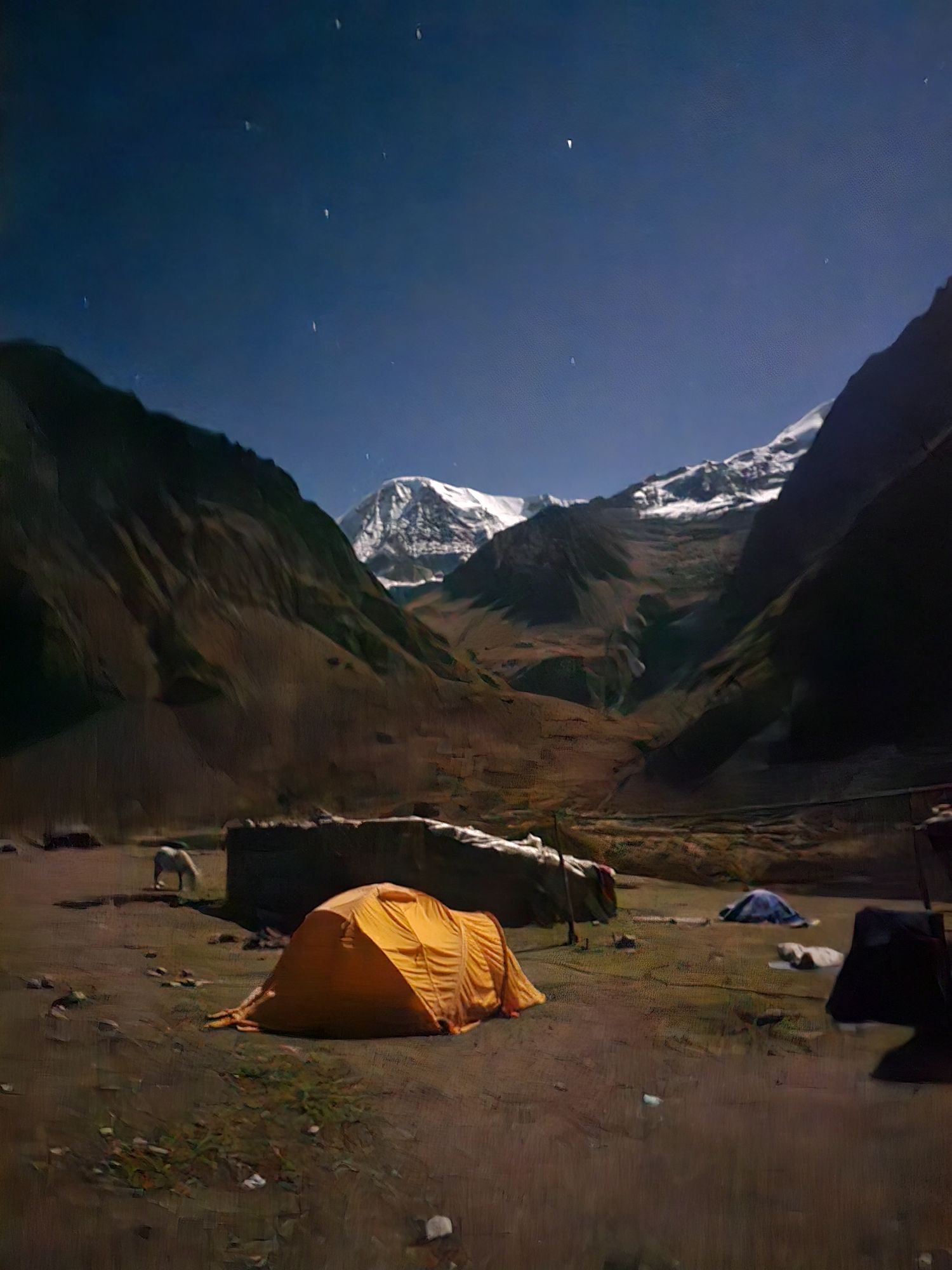
The textbooks say that headache comes next, and it's a biggy. At altitude a headache may be coming from the accumulation of fluid in the brain, which is the start of a whole separate bag of fun. Rapid ascent / insufficient acclimatisation are the most likely causes of Acute Mountain Sickness, but some people are also genetically predisposed to it. The only real treatment is descent, which is a bummer turning back might mean ending your whole trek.
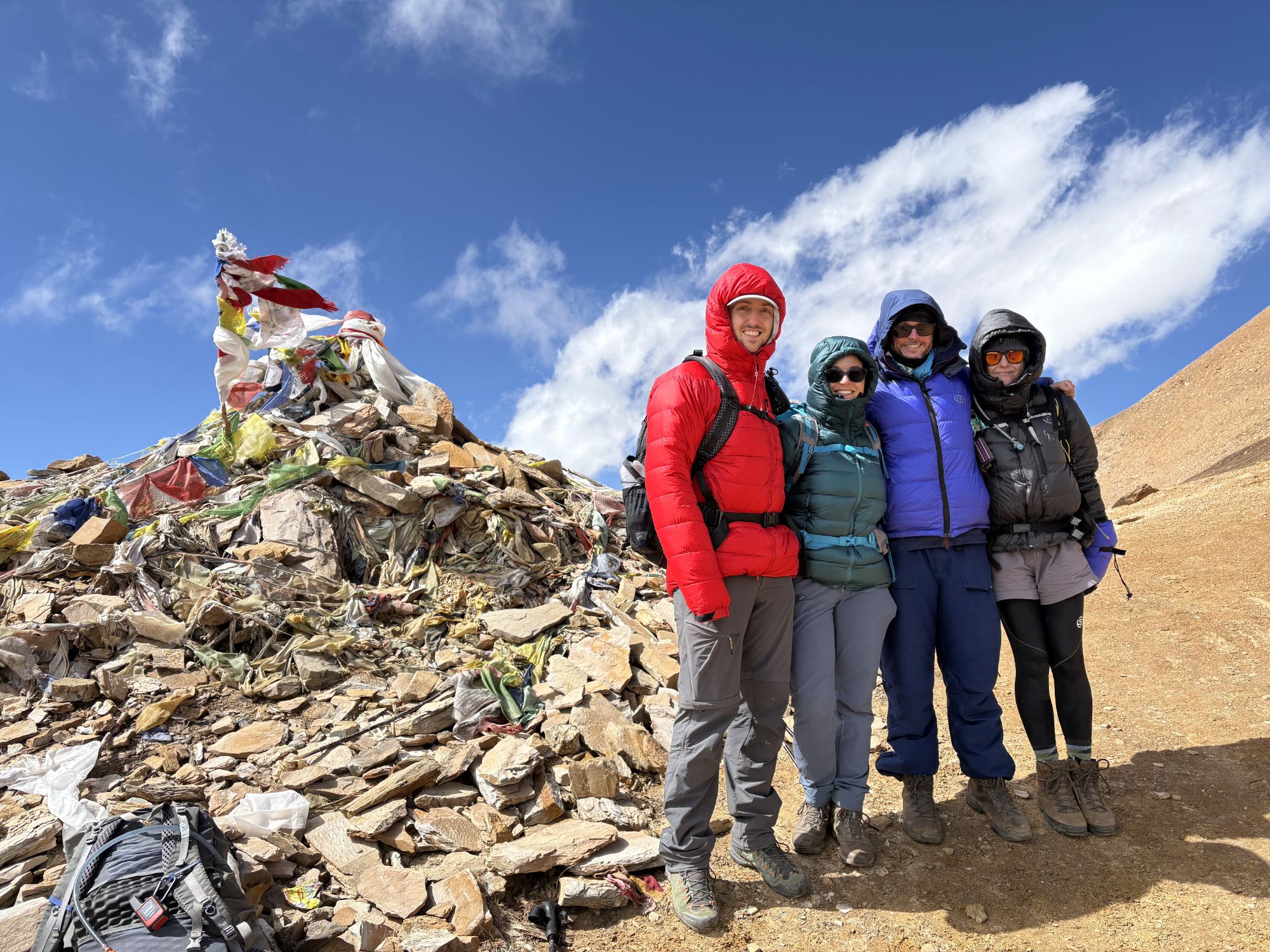
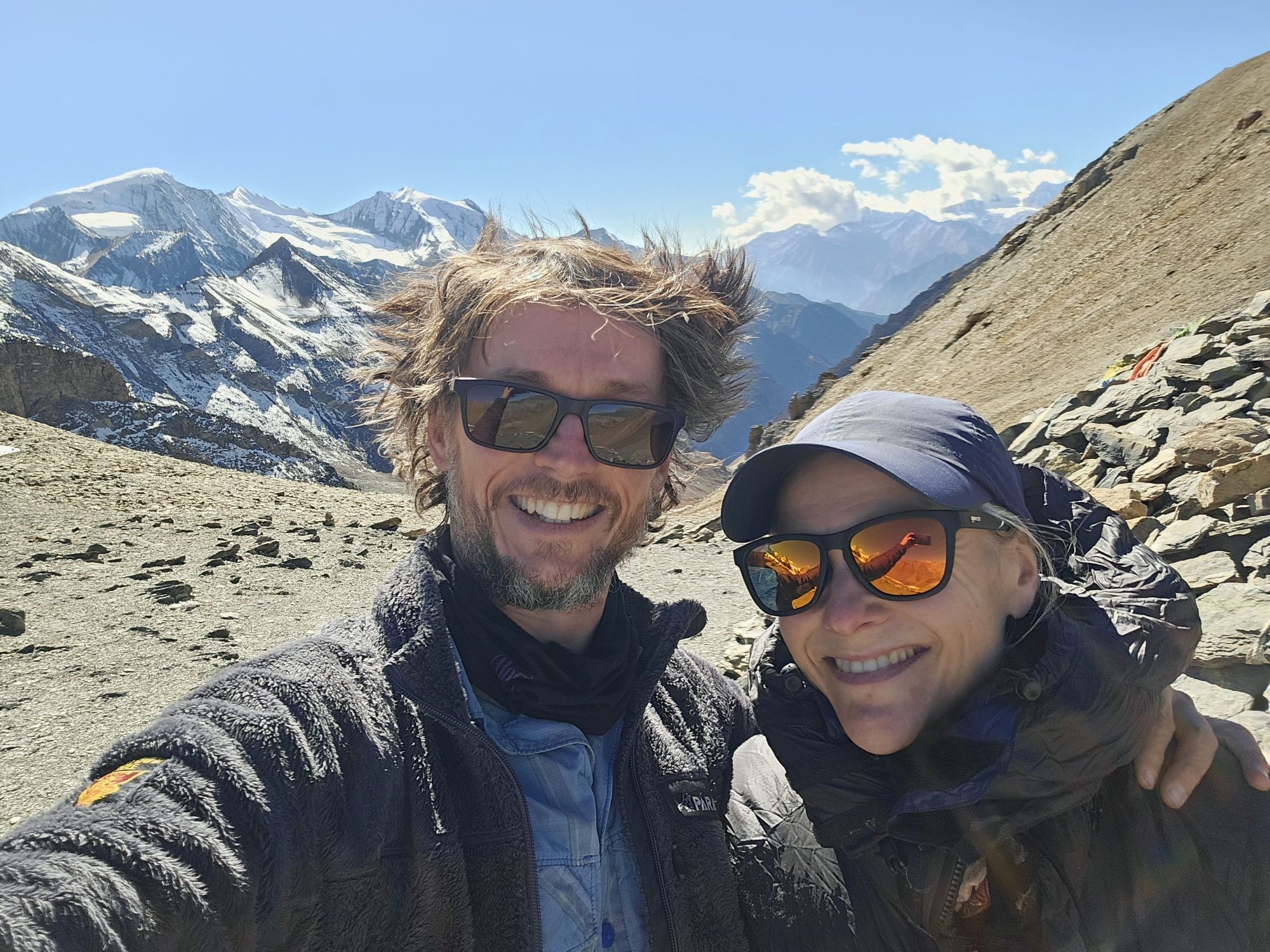
Happily luck and a careful acclimatisation plan have kept us free of any severe impacts. But the ordinary impacts can still be challenging. It hit me hardest as we ascended to our 'personal best' of 5,300 m over Numala La (29°10.539′ N, 83°05.968′ E).
Crossing the Numala Lek range requires two high passes on consecutive days. Our ascent to the first (Bagala La at 5,100 m) required a 1,400 m climb and had left me exhausted. The higher second pass (5,300 m) would take everything I had left.
From about 4,900 m I was breathing once for every footstep, twice for a lunge up a large rock. I looked upwards to where Sam was skipping along behind Norbu at the snowline, and envied (for the first time!) her years of dedication to cardio training. I marked the time, thinking I must be at least half an hour behind them. Small, slow, plodding steps. "Too fast!" gurgled a warning from my bowels (not a common symptom, but whether by camp hygiene or altitude one that has plagued me at each of three 5,000 m locations).
I slowed, doubled over and breathing hard. With that emergency averted I stepped up onto the next rock. Dizzy. Ok, this is really going to be slow. Little by little I worked my way up the trail, at times moving at just 1 hour/km (against a trekking average of about 15 minutes). But when I passed the point I'd marked I was less than ten minutes behind Sam and Norbu. It had felt like ten times that!
Missing imported image: Triumphant at 5,300 m
Tomorrow we have another long climb, some 1,600 m in a day and a high camp. As I look up from typing the range ahead has been engulfed in afternoon cloud. I wonder what tomorrow will bring!