The first glimpse of sunlight peeks over the mountain pass, cutting a bright streak through the morning smoke above. It will be another hour before the shadow of the eastward mountains gives way, and the morning chill fogs my breath.
Below, the prayer flags hang motionless. The wind had whipped them in constant motion yesterday, sweet from the flowering hemp plants that are the ubiquitous border to every cultivated field. But the morning is still and crisp, clear blue skies not yet filled with the steam that will boil off the valley floor when the sun finally reaches it. The flutter of a wooden flute drifts up from somewhere down the valley, and I take it as a tribute to the morning rays above.
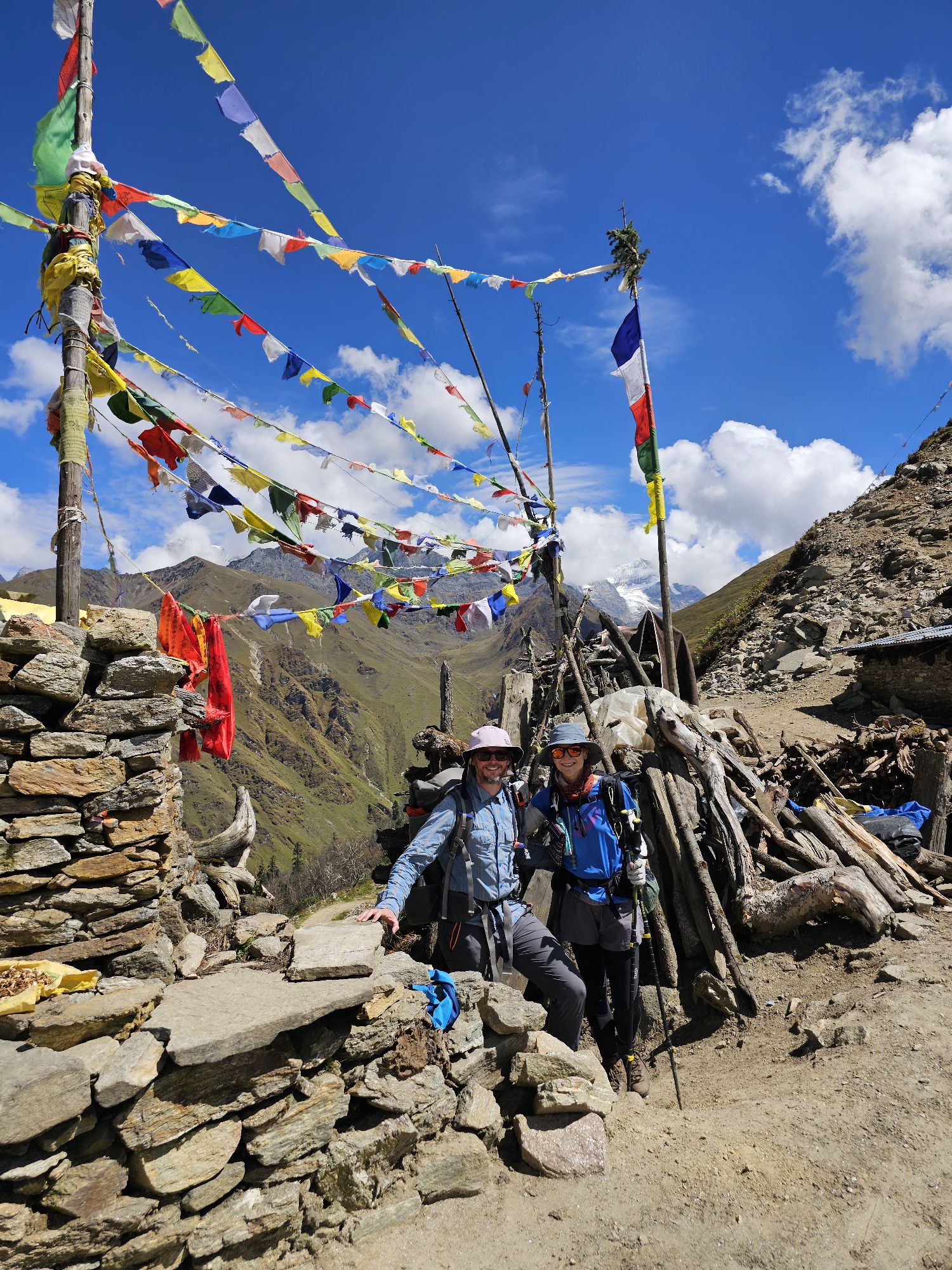
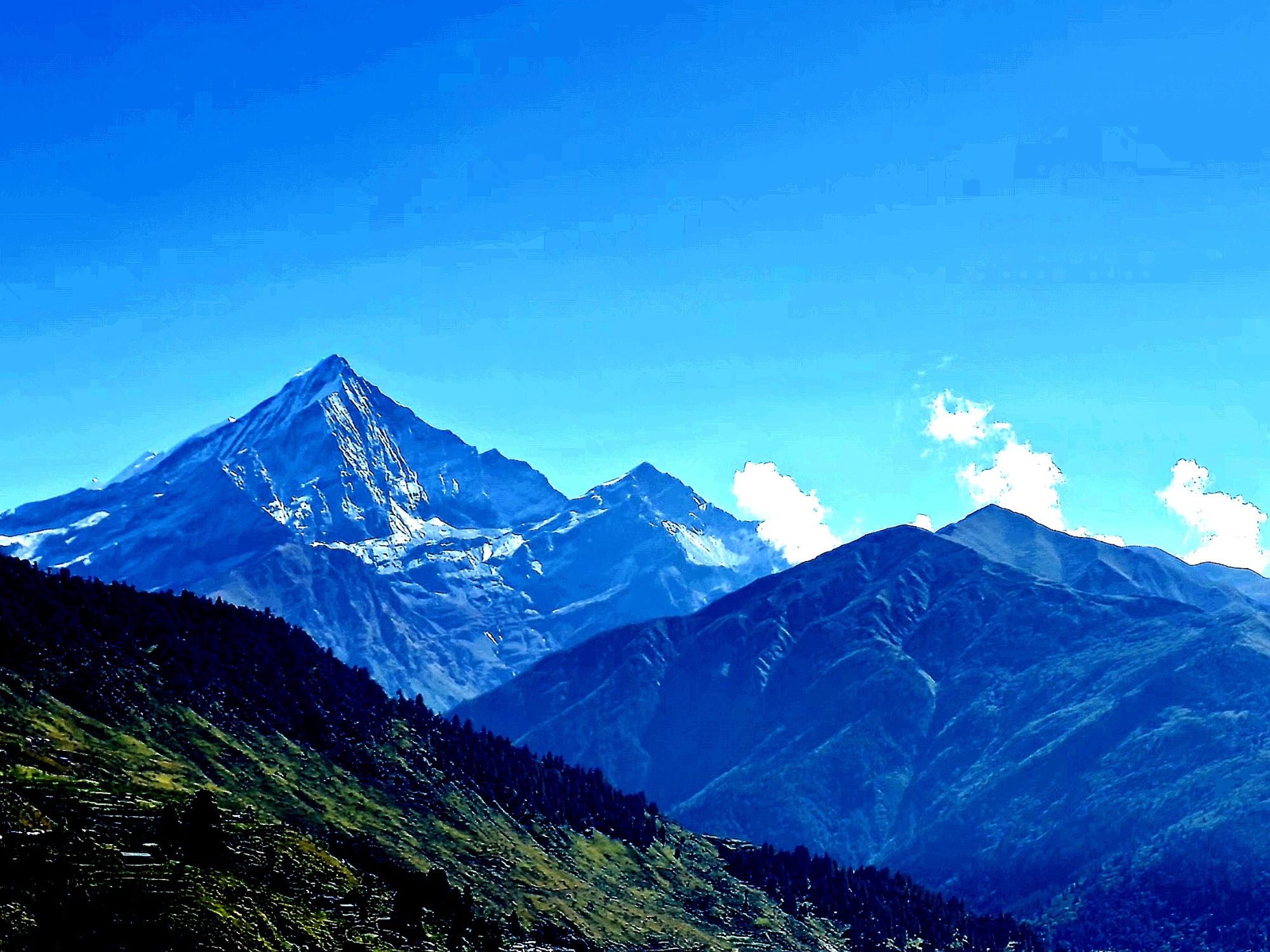
We are three days walk from Jumla, watching the sunrise and cleaning teeth on the concrete roof of our teahouse in Chaurikot village. Overnight rain has dusted yesterday's mountain pass with snow, Maure Lagna at 3,894 m and the highest point on our trek so far. A short distance down the trail we will catch our first view of Kagmara Lek, the 6,000 m peak that will be our companion for the new few days. It is exactly as a child might draw a mountain: steeply triangular, rocky, snow capped and glaciated. It stands between here and Phoksundo Tal where SS and CLP will leave us. To get there we must climb the mountain's northern flank to the 5,115 m pass called Kagmara La, a three day effort of wilderness camping.
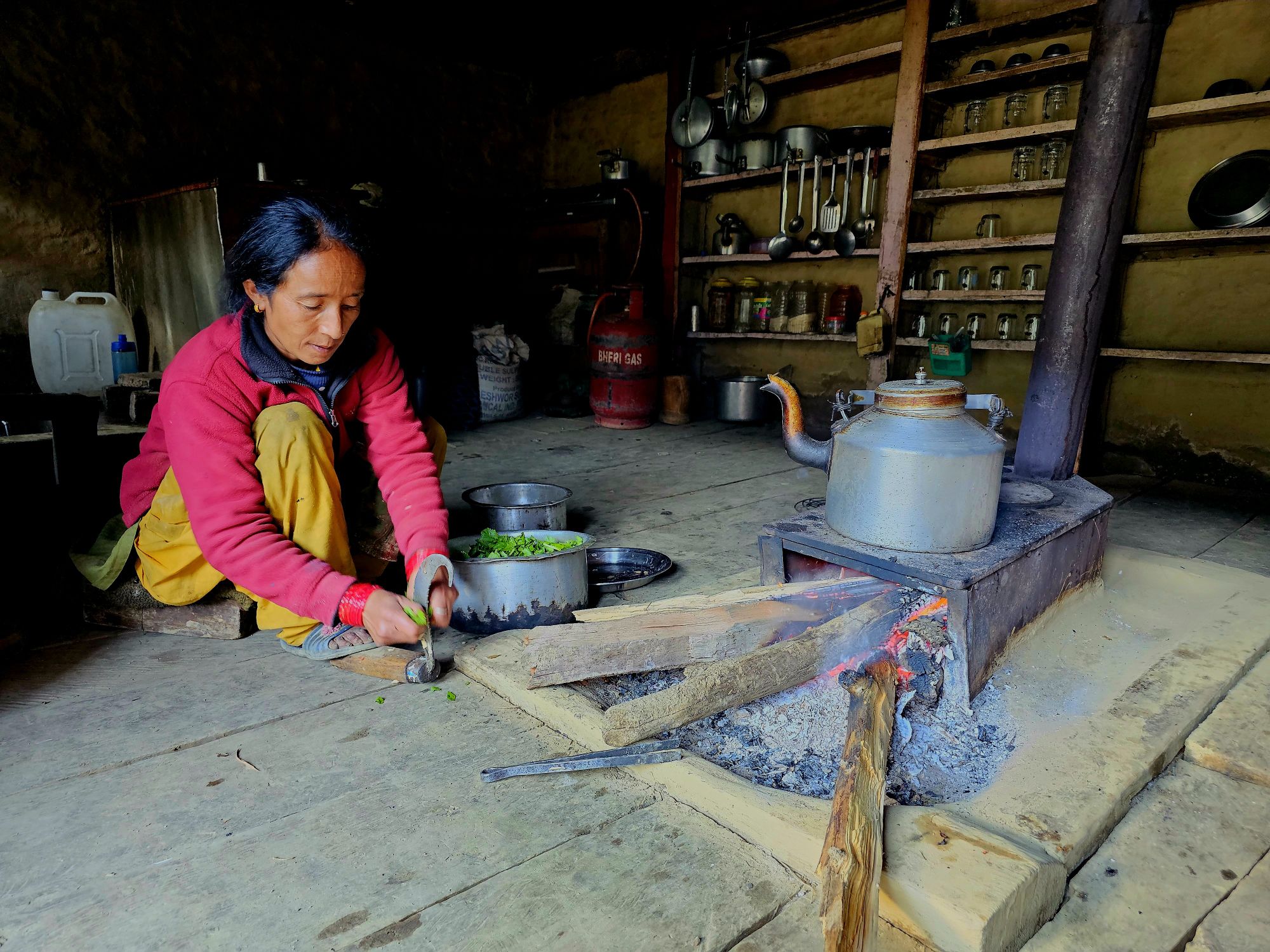
We prepare for the pass at Kaigaon, now four days from Jumla, and the kitchen this time belongs to Norbu's sister-in-law. Our hardy porters will head home tomorrow, their loads to be taken by a pack horse, whilst a second carries food, cooking gas and camping equipment for the smaller party's traverse of the high mountain pass.
The family setting is warmly welcoming, initial shyness of Norbu's nieces and nephews quickly turning to curiosity (and then excitement at SS's origami and the discovery of Sam's stash of sweet snacks, intended for the cold campsites to come!).
Life in the mountains has settled into a steady rhythm. We rise early to cover some ground before the heat of the sun kicks in. Most of the trekking is done between breakfast with our hosts and lunch either at or nearing the day's destination. Afternoons are quiet, we rinse out some clothes, filter some water, rest, puzzle over crosswords and jot thoughts in our journals. Evening meals are much like the first two, always sitting cross-legged in a horse-shoe around the edge of the kitchen, with the wood-fired cooking stove at the centre. Our host and Norbu's nephew Lhundup share the cooking, whilst we try to be gracious in acceptance of the status of honoured guest.
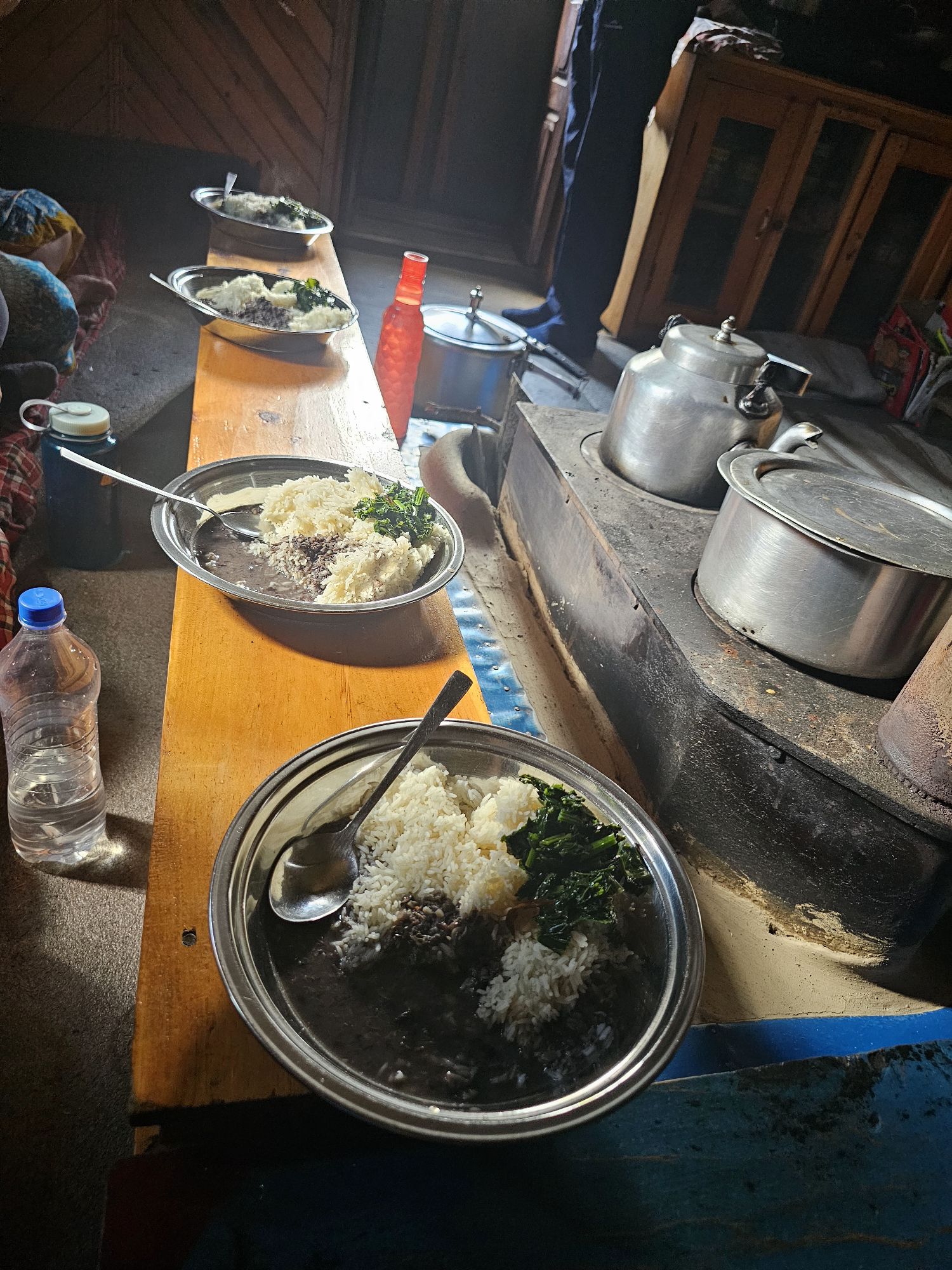
Norbu constantly worries that we will be bored that all three meals are typically Dal Baht, the standard Nepalese meal of rice, wet lentil sauce and a curry made with either potato, cauliflower or cabbage. We confound his expectations of foreigners by loving every meal, enjoying the slight variation in each host's recipe.
But just as the familiar rhythm of trekking life been established, it is set to be shattered. Tomorrow we leave the teahouses and all relate civilisation behind, in the camping section of the trek. Acclimatisation to much higher altitude, colder nights and more rugged trails will test us. In return we are promised close-up views of the tallest mountains most of us have ever seen, and a well earned rest at the fabled Phoksundo Lake.